
Planview, implemented for life sciences performance at scale
Planview, implemented for life sciences performance at scale

As a trusted Planview project management services partner,
we empower life sciences companies by connecting strategy, portfolios, financial planning, capacity and delivery execution in a centralized ecosystem, with smart integrations that sync workflows and raise portfolio visibility.
We help address common portfolio and delivery challenges for life sciences leaders and deliver end-to-end Planview PPM services.

Strategic Integrated Portfolio Management
We help you address any lack of strategic alignment and poor visibility in your life sciences programs, by structuring your portfolio around business strategy and governance needs in the Planview platform. Our goal is to strengthen your decision-making and ensure that investments support major enterprise priorities.

Financial & Capacity Planning
Our experts give a simplified structure to complex financial and resource planning, by setting up connected planning workflows that brings discipline and aligns demand with real capacity. This way, we help improve accuracy in forecasting and support optimal resource utilization in your everyday initiatives.
Prioritization and Scenario Analysis
We leverage the Planview portfolio management tool to operationalize data-driven prioritization and scenario analysis, to reduce inefficient delivery and collaboration in your teams. Through a consistent decision framework, we help senior leaders make informed investment decisions and strategic trade-offs when priorities compete.

Delivery Management
By setting up smart delivery management workflows, we help reduce any inefficiencies or friction points in execution and improve collaboration for your teams. Our delivery management strategy assures accelerated delivery, higher visibility and more coordinated outcomes.

Seamless Integration Ecosystem
Our experts help your life sciences teams overcome the hassle of limited connectivity across toolchains by introducing unified workflows and real-time data synchronization in and out of Planview platforms. It resolves the risk of fragmentation and keeps everybody working from consistent, connected portfolio and delivery data.
Planview Universal Connector (through Planview Hub) creates a pathway to build integrations to any tool in your software toolchain. As a trusted partner, i2e Consulting uses this capability in enabling your life sciences teams to:


Why OnePlan is the closest Project Online alternative for modern PPM
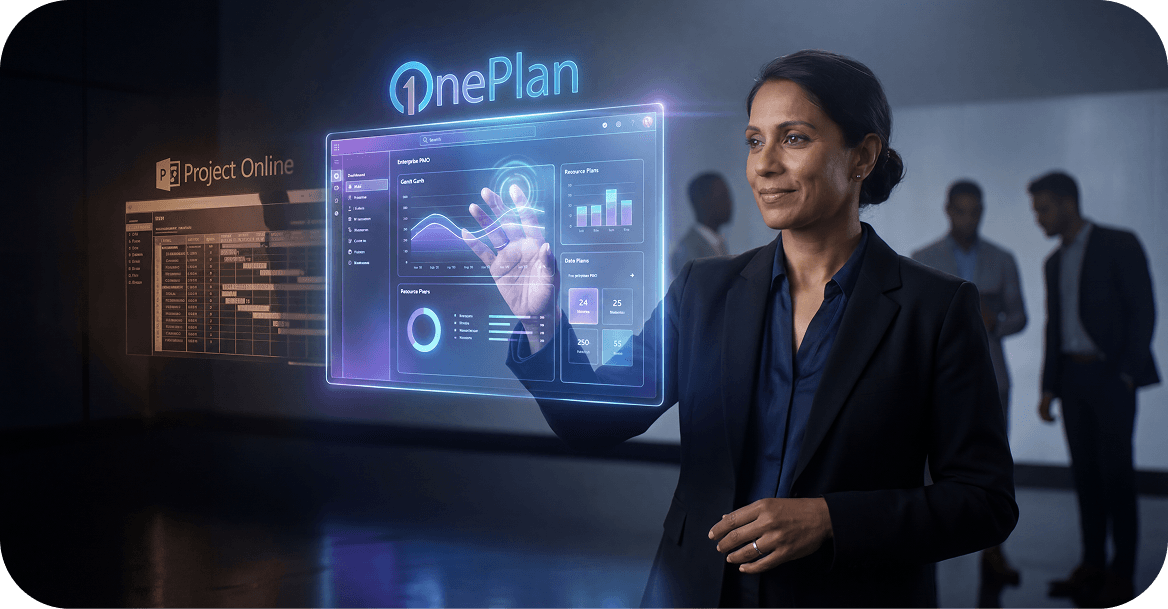
For pharmaceutical PMOs that operate on Project Online (PO) – stage gates, resource capacity, timesheets, portfolio dashboards and more – it’s retirement timeline is a key strategic inflection point.The transition demands a modern, Microsoft-aligned platform that preserves governance discipline while enabling more integrated, data-driven decision-making. In this blog, we’ll dive into how OnePlan stands out as the closest, like-for-like best alternative for Project Online, particularly for enterprises committed to the Microsoft ecosystem.What are the key challenges organizations face as Project Online retiresThe retirement of PO exposes structural weaknesses that were often tolerated because the platform was stable and embedded. Here are a few risks to be aware of: Type of risk What the risk typically exposes for PMOs Custom workflows & PWA technical debtYears of custom workflows and configurationsLayered PWA setup built over timeComplex reporting layers connected to legacy structure Reporting fragmentation & analytics gapsPortfolio analytics depend on external toolsManual reconciliation to generate insightsSlow scenario modelling and limited near real-time visibilityChange management & governance disruption Stage gates tightly linked to portfolio processesFinancial approvals embedded in cadenceRegulatory milestones tied to system-driven governanceResource capacity planning maturity gap Capacity visibility unsolved by tools aloneInconsistent data governance for resource inputsLack of standardized portfolio processes for capacity views .card-component { display: flex; border-radius: 17.5px; border: 1px solid #CEE0EB; background: linear-gradient(126deg, #EBF7FF 28.88%, #FFF 86.32%); font-family: 'Open Sans', sans-serif; width: 80%; margin-bottom: 20px; } .card-image { width: 30%; } .card-image img { width: 100%; height: 100%; object-fit: cover; display: block; } .card-content { width: 70%; display: flex; flex-direction: column; justify-content: center; padding: 24px 30px; gap: 8px; } .card-tag { color: #008BFF; font-size: 12px; font-weight: 700; margin: 0; } .card-title { color: #232322; font-family: Montserrat; font-size: 18px; font-weight: 700; line-height: 21px; margin: 0; } .card-description { color: #272727; font-size: 10px; font-weight: 400; line-height: 20px; margin: 0; } .btn-card { display: flex; width: 124px; height: 36px; justify-content: center; align-items: center; border-radius: 83px; background: #008BFF; color: white; font-weight: 700; font-size: 12px; text-decoration: none; margin-top: 10px; } .btn-card:hover { background: #007ACC; } /* Responsive */ @media (max-width: 768px) { .card-component { flex-direction: column; } .card-image { width: 100%; } .card-content { width: 100%; padding: 20px; } } PROJECT PORTFOLIO MANAGEMENT Microsoft Project Online alternative? Find your fit with OnePlan. Join the webinar to choose the right modern PPM solution. Join webinar OnePlan alternative to Project Online: modern PPM capabilities built for the Microsoft ecosystemOnePlan is designed to connect strategy to execution across the Microsoft stack. For organizations standardized on Microsoft 365, Power Platform, and Azure DevOps, this alignment is critical. A brief look into OnePlan’s benefits and core capabilities:Portfolio visibility with centralized dashboards across initiativesResource capacity planning to balance demand and supply across functionsFinancial management to track budgets, forecasts, and actuals at portfolio levelRoadmap and scenario planning to model trade-offs before committing investmentConfigurable governance workflows aligned to stage gates and approval hierarchies Because it integrates natively with Microsoft technologies, organizations can extend reporting through Power BI, automate workflows via Power Automate, and align work management across Teams and DevOps. For life sciences enterprises managing clinical, regulatory, and commercial programs in parallel, this unified architecture reduces manual handoffs and improves data consistency.OnePlan as a Project Online alternative: why it’s the closest replacement From a functional perspective, OnePlan maps closely to the capabilities that made Project Online central to enterprise PPM. That said, let’s dive into the features of OnePlan PPM solution compared to Project Online:1. Microsoft ecosystem integration Project Online users value tight alignment with Microsoft. OnePlan, as a Project Online replacement, preserves that ecosystem logic, integrating with Microsoft 365 and related services rather than forcing a disconnected environment.2. Ease of migrationOrganizations familiar with Microsoft-centric portfolio structures can transition governance models, project hierarchies, and reporting concepts with less conceptual disruption. This reduces user resistance and training overhead.3. Portfolio and resource management depthProject Online offered strong scheduling and resource allocation. OnePlan extends this with more structured portfolio planning and scenario capabilities, supporting executive-level trade-off analysis.4. User experienceMany legacy PWA implementations evolved into complex environments. As a Project Online alternative, OnePlan offers a modern interface that consolidates views across portfolios, resources, and financials, improving adoption across business and IT stakeholders.5. Reporting and scalabilityInstead of relying on disconnected exports, OnePlan leverages the broader Microsoft data ecosystem for scalable reporting. For global organizations with hundreds or thousands of active initiatives, this architecture supports growth without redesigning the platform.In short, OnePlan benefits over Project Online for enterprises are plenty. The tool does not just replicate Project Online; it retains the operating model discipline while enabling a more integrated portfolio management approach.What are the advantages of OnePlan PPM solution compared to other Project Online alternatives?Generic work management tools often focus on team-level task collaboration. They are effective for lightweight coordination but lack enterprise-grade portfolio governance.As the best Project Online alternative for agile teams, OnePlan differentiates itself in three areas:Strategic portfolio alignment: Initiatives can be explicitly linked to strategic themes and investment priorities, enabling structured prioritizationCross-tool orchestration: Work across multiple delivery systems can be aggregated into a single portfolio view, reducing fragmentationAdvanced analytics: Configurable dashboards and data models support scenario planning and executive reporting without heavy customizationsFor organizations that have outgrown simple task tracking but do not want to lose Microsoft alignment, these OnePlan features are critical. Note: Choosing the right platform that aligns with your portfolio goals requires a structured evaluation. For more details, read our guide on Strategic PPM tool selection.Switching from Project Online to OnePlan: a low-risk migration pathOur experts advise that a low-risk migration requires disciplined execution. Here’s our step-by-step guide on how to move to OnePlan as Project Online retires: StepActions to be taken Current-state assessment: Inventory active projects, custom fields, workflows, integrations, and reports. Configuration and data audit:Identify redundant fields, obsolete templates, and technical debt. Target design definition: Align the future OnePlan configuration to strategic portfolio objectives, not simply legacy replication.Coexistence and phased rollout: Transition portfolios in waves to minimize disruption. Integration design: Rebuild or rationalize integrations with finance, HR, and development systems. Training & change management: Equip PMs, functional leaders, and executives with clear process guidance.Consulting with a PPM partner like i2e Consulting, with deep life sciences industry expertise ensures that governance, documentation, and validation are embedded into the migration plan. The i2e point of view: futureproofing your PPM strategy with OnePlanFrom our perspective, OnePlan for Project Online users is an opportunity to elevate PPM maturity. When implemented with disciplined governance and data standards, the tool capably supports portfolio operations within a Microsoft-first ecosystem. For life sciences enterprises balancing pipeline acceleration, regulatory compliance, and capital discipline, this integrated architecture is essential.At i2e, we do not stop at replacing the tool. As certified OnePlan partners, we stay through strategy definition, configuration, integration, and change adoption. Our experts design an ideal portfolio operating model that integrates your portfolio strategy, execution, finance, and resource capacity into one decision loop. Consult with us today to start your Migration from Project Online to OnePlan.Frequently Asked Questions .faq-wrapper { max-width: 850px; margin: 20px auto; font-family: 'Open Sans', sans-serif; } .faq-item { border-bottom: 1px solid #e0e0e0; padding: 10px 0; } .faq-item summary { font-family: 'Montserrat', sans-serif; font-size: 18px; font-weight: 600; cursor: pointer; list-style: none; position: relative; padding-right: 30px; } /* Remove default marker */ .faq-item summary::-webkit-details-marker { display: none; } /* Down arrow (closed state) */ .faq-item summary::after { content: "▼"; position: absolute; right: 0; top: 0; font-size: 16px; transition: transform 0.3s ease; } /* Up arrow (open state) */ .faq-item[open] summary::after { content: "▲"; } .faq-item p { margin-top: 12px; font-family: 'Open Sans', sans-serif; font-size: 17px; line-height: 1.7; color: #272727; } 1. Why is Microsoft Project Online being retired? Microsoft Project Online is being retired as part of a shift toward modern, cloud-first and AI-enabled work management tools within the Microsoft ecosystem, with support ending on September 30, 2026. 2. What is the best alternative to Microsoft Project Online? OnePlan is widely considered a leading alternative because it offers enterprise project portfolio management (PPM), resource planning, and financial management within the Microsoft 365 ecosystem. 3. How is OnePlan different from Microsoft Project Online? OnePlan provides modern PPM capabilities such as AI-driven insights, portfolio modeling, and unified work management, while Project Online is based on legacy architecture with limited innovation. 4. What is a modern PPM solution? A modern PPM solution is a cloud-based platform that connects strategy, planning, execution, and reporting, enabling better decision-making and visibility across projects. 5. How do I choose the right Project Online alternative? To choose the right Project Online alternative, evaluate Microsoft 365 integration, scalability, and advanced PPM features like portfolio planning and reporting. Also consider ease of migration, user adoption, and AI-enabled insights to ensure a smooth transition and future-ready project management.

Making the switch: A Step-by-Step Checklist for a successful PPM tool transition
Checklist for a successful PPM tool transitionFor pharma and life sciences organizations, project portfolio management is a core enabler of strategic alignment and operational visibility. When existing tools fall short of supporting complexity or evolving needs, the need to evaluate and transition to a new PPM solution becomes clear.However, a PPM tool switch is rarely just about technology. In almost all situations, it is an outcome of a need to change processes, data, and/or how teams collaborate.Let’s first look at the various aspects which need to be evaluated before you go hunting for PPM tools.Key aspects to consider before the transitionBefore choosing a tool and starting the transition, it is essential to do an analysis of your current state and future vision. The processes involved in a PPM tool typically impacts finance, resourcing, governance, executive reporting, and of course the functions and project team involved in delivery. Without a structured approach, organizations risk incomplete adoption, process disconnects, and underutilized investments.Download the checklistExcel PDFDefine your ecosystem (tools + processes)Clarify which tools and processes currently support portfolio and project management. Map ownership across teams, identify overlaps or manual workarounds, and assess how the current tool supports strategic alignment as well. Take note of any gaps and define future criteria based on business value, risk, and other relevant parameters. A transition to a new tool is also an opportunity to optimize processes and address inefficiencies. Document existing challenges and unmet needs to ensure they are accounted for during the transition or planned as part of future enhancements.Set a clear improvement benchmark Frame what “better” looks like, for instance improved visibility, simplified reporting, more accurate forecasting, or more user engagement and adoption. Quantify the benefits if possible. Ensure alignment on the scope, taking into account areas such as resource management, project management and execution, integration and data migration, governance and security, and user adoption.Identify decision criteria Align tool selection to suit your business priorities. Cost, user experience, integration, and scalability are common factors, but priorities vary by organization's size and maturity. Identify and assign priorities according to your business needs; the most critical needs should be given more priority than the rest.Design for scale Plan your implementation in phases to minimize disruption and allow for iterative feedback. Engage a third-party PPM expert to support the selection, conduct the tool transition or even just upgrade testing to minimize risk and support any change to existing processes.Consider your reporting strategy upfront, whether you will utilize a PPM tool’s reporting solutions, a data warehouse with a visualization solution on top of it, or a hybrid. Questions to ask include whether your leadership team will utilize the same tool as your operational teams, if you will need trend analysis, and how you expect AI to play a role. Include a mapping of the databases which need integration to support the data that will drive your stakeholders’ decisions., Ensure adaptability Select a solution that can grow with you. Consider long-term integrations and assign internal ownership to maintain flexibility. Prepare a future roadmap of your portfolio growth and evaluate the tool against them.Plan for change management early on Stakeholder alignment is the number 1 key to success – have a sponsor and ensure their engagement throughout, including a communication plan to all stakeholders. Involve users early. Understand their challenges and create room for feedback. Appoint a business system owner to support and evolve the solution beyond go live. .downloadblog{ width: 180px; height: 42px; border-radius: 35px; background: #008bff; color: #fff; font-family: var(--font-montserrat); text-align: center; font-size: 20px; font-style: normal; font-weight: 700; line-height: normal; border: none; } Ready to take the next stepSwitching your PPM tool is a strategic decision. This checklist can help you structure the conversation, build alignment, and plan with confidence.Download the checklist now Frequently Asked Questions .faq-wrapper { max-width: 850px; margin: 20px auto; font-family: 'Open Sans', sans-serif; } .faq-item { border-bottom: 1px solid #e0e0e0; padding: 10px 0; } .faq-item summary { font-family: 'Montserrat', sans-serif; font-size: 18px; font-weight: 600; cursor: pointer; list-style: none; position: relative; padding-right: 30px; } /* Remove default marker */ .faq-item summary::-webkit-details-marker { display: none; } /* Down arrow (closed state) */ .faq-item summary::after { content: "▼"; position: absolute; right: 0; top: 0; font-size: 16px; transition: transform 0.3s ease; } /* Up arrow (open state) */ .faq-item[open] summary::after { content: "▲"; } .faq-item p { margin-top: 12px; font-family: 'Open Sans', sans-serif; font-size: 17px; line-height: 1.7; color: #272727; } 1. What is a PPM tool transition checklist? A PPM tool transition checklist is a structured guide that helps organizations move from one project portfolio management system to another without disrupting ongoing projects. It outlines steps such as assessing the current environment, cleaning and preparing data, planning migration, testing the new platform, and supporting user adoption. 2. Why is a checklist important when transitioning to a new PPM tool? A checklist ensures that critical steps like data validation, workflow mapping, integrations, and stakeholder communication are not overlooked. Without a structured process, organizations risk data loss, reporting issues, and reduced adoption of the new platform. 3. When should organizations start planning a PPM tool migration? Planning should start several months before the migration to allow time for system evaluation, data cleanup, and testing. Early planning helps minimize downtime and ensures that business-critical projects continue running smoothly. 4. How long does a PPM tool transition typically take? The timeline depends on factors such as portfolio size, data complexity, integrations, and customization requirements. Smaller migrations may take a few weeks, while enterprise transitions can take several months.

6 Warning signs your PPM tool is holding you back and how to fix them?
6 Warning signs your PPM tool is holding you back and how to fix them? In a market flooded with Project Portfolio Management (PPM) tools, it is important to find one tool or a combination that fits your business needs, but does it end there? No, it doesn't. As portfolios continue to grow and evolve, so should the tools and processes around them.Right from the evaluation of PPM tool capabilities and integration potential, to ensuring alignment with your project workflows, team structures, and governance models, the journey is anything but straightforward. What looks good on paper may fall short in practice if the tool doesn’t support your organization’s decision-making rhythms, reporting needs, or future scalability. In this blog, we unpack some of the signs that indicate your current PPM may not be working for you.6 Signs to change or upgrade your PPM toolWhether you are managing a local functional level portfolio, or a global multi-therapy portfolio, your PPM tool should scale to match your future vision. Most of the times, the real problem lies in improper customization of the tool, or lack of proper alignment of the tool with the processes around it.As time passes, even the most robust tools can quietly become misaligned as your portfolio grows in complexity and your processes and tool cannot catch up.Here are 6 signs to watch out when your portfolio is growing.1. Lack of visibility and transparencyIn life sciences, where development timelines span years, costs reach billions, and go/no-go decisions hinge on granular data, lack of visibility isn’t just inconvenient—it’s risky. If stakeholders struggle to see the true status of projects, resource bottlenecks, or shifting priorities across the portfolio, it’s often because the PPM tool isn’t surfacing the right information in the right format.This can result inLack of progress visibility to the clinical project leadsResource managers cannot access real-time insights over-allocations across cross-functional teams.Finance and strategy teams operating with inconsistent dataLimited visibility to the senior leadership for proactive decision-makingThe fix: Integrate data across functions and systemsEnable role-based dashboardsConnect strategic governance to operational executionAdopt a layered approach: tools+analytics+services2. Relying on manual processesIf your team is still exporting data from the PPM tool to create trackers, forecasts, or summaries in excel, they are building parallel processes outside the system. In life sciences, clinical milestones are tied to regulatory submissions, resource planning needs to be done across multiple functional roles, and cost forecasting should be incorporated into scenario planning and PTRS-based risk adjustments. When spreadsheets are used for any of the above, it breaks traceability, auditability, and data integrity—which are non-negotiables in pharma.The fix:Audit what is being done outside the tool and whyMap critical decision areas (e.g., resource trade-offs, milestone projections, risk-adjusted value)Extend your current PPM tool with tailored integrations3. Difficulty adapting to strategic changeIn life sciences, strategic agility isn’t optional—it’s mission-critical.Pipeline reprioritizations, licensing deals, market shifts, regulatory delays, and clinical data surprises are part of daily life. When your PPM tool can’t adapt quickly to these realities, it doesn’t just slow down operations—it weakens your strategic posture.If your current tool requiresManual rework to update forecasts or resource allocationsWeeks to reflect new prioritizations from governanceOffline modeling of portfolio impactsThese can cause serious issues during some strategic triggers that require rapid adaptation. For example, businesses acquiring a biotech pipeline- Entire new projects and data sets need to be integrated rapidly.The fix:Enable scenario modeling within the PPM environmentTie prioritization to strategic driversAllow real-time, role-based replanningConnect strategic decisions to execute workflows4. Data silos and integration issuesWhen systems cannot talk, people build manual work arounds, and that’s when errors, delays, and mismatches happen.In life sciences, portfolio success depends on how accurate and real-time the data is flowing between clinical, regulatory, finance, and commercial teams. But if your PPM tool is not integrated well, it creates data silos, and decision-making blind spots.For example,Clinical trial milestones are updated in the CTMS but not reflected in portfolio timelines, Finance forecasts in SAP does not align with resource assumptions in the PPM tool,Resource planning tools operate separately from program plans, creating over- or under-utilizationThe result? Reporting becomes reactive, portfolio insights become outdated, and governance decisions are made on partial or inconsistent data.The fix:Identify and map critical data touchpointsUse APIs , data warehouses, or middleware for seamless flowCentralize reporting with a unified data layerImprove adoption by reducing complexity5. Frequent project delays and missed timelinesIn life sciences, R&D timelines stretch over years, and project delays and missed timelines can impact patient access, revenue realization, and consistent project overruns. If projects across your portfolio areSlipping their milestonesMissing regulatory submissions targetsRequiring last-minute firefighting on resource or budget allocationAnd the project teams have no visibility before this can happen, so it’s often not the science or the team—it’s a sign that the PPM tool is no longer providing the right foresight to plan and execute effectively.The fix:Configure timeline logic to reflect real-world dependenciesAdd risk triggers and milestone health checks inside the toolEmbed resource forecasting modules into the toolActivate portfolio-level impact tracking6. Lack of reporting and analyticsIf your PPM tool cannot generate the right reports, or it is bound to export raw data to just build custom views, then your PPM tool is slowing down decision making or is causing the team to rely on outdated decisions.Common indicators areComplicated to compare budget vs actuals by function or programReports lacking granularity and clarityStatic portfolio views with no trend lines, variance tracking and drilldownsWithout timely, trusted insights, your team is stuck in reactive mode—reporting the past instead of steering the future. It is time to explore the reporting capabilities of your existing tool or evaluate the need to build an external reporting system.The fixDesign role-based dashboards for decision-makersIntegrate real-time performance tracingInclude trend analysis and historical viewsLayer predictive analytics for decisionsBuild Reporting Database and integrate data from PPM tool, financial toolsConclusionAdopting a PPM tool means countless hours of research, training and change management. Even if you notice one or many of these warning signs, you need not always replace the entire tool. Many times, with a few customizations and process fixes, portfolio management systems can be configured to support your growing portfolio needs.i2e can helped global life sciences organizations fix and extend their PPM tool capabilities byDesigning a maturity-based roadmap customized to your portfolio complexityExtending the current PPM tool with integrated analytics and dashboardsConfiguring milestone logic, risk signals, and resource forecasting inside your toolAutomating reporting and scenario planning across portfolio layers Frequently Asked Questions .faq-wrapper { max-width: 850px; margin: 20px auto; font-family: 'Open Sans', sans-serif; } .faq-item { border-bottom: 1px solid #e0e0e0; padding: 10px 0; } .faq-item summary { font-family: 'Montserrat', sans-serif; font-size: 18px; font-weight: 600; cursor: pointer; list-style: none; position: relative; padding-right: 30px; } /* Remove default marker */ .faq-item summary::-webkit-details-marker { display: none; } /* Down arrow (closed state) */ .faq-item summary::after { content: "▼"; position: absolute; right: 0; top: 0; font-size: 16px; transition: transform 0.3s ease; } /* Up arrow (open state) */ .faq-item[open] summary::after { content: "▲"; } .faq-item p { margin-top: 12px; font-family: 'Open Sans', sans-serif; font-size: 17px; line-height: 1.7; color: #272727; } 1. How do I know if my current PPM tool is no longer meeting my business needs? If your PPM tool lacks real-time visibility, relies on spreadsheets, has poor integrations, or cannot adapt to strategic changes, it may no longer support effective project portfolio management and should be upgraded or extended. 2. Why is Project Management for Pharmaceutical Industry more complex than other industries? Pharma projects are complex due to long timelines, strict regulations, high costs, and cross-functional dependencies, requiring robust tool for effective management. 3. Why is cross-functional visibility important in Project Management for Pharmaceutical Industry? Real-time visibility ensures clinical, regulatory, finance, and commercial teams can make informed decisions, avoid bottlenecks, and manage risks across the portfolio in Project and Portfolio Management.
