
From Chaos to Clarity: A strategic approach to PPM tool selection
From Chaos to Clarity: A strategic approach to PPM tool selection

This whitepaper explores the evolving landscape of Project Portfolio Management (PPM) in life sciences, emphasizing the importance of selecting the right toolset to support organizational strategy, resource optimization, and cross-functional transparency.
It outlines:
PPM leaders and decision-makers in life sciences seeking clarity on tool selection.
Organizations aiming to align their portfolio strategy with execution.
Teams looking to optimize resources, improve collaboration, and increase decision confidence.
Anyone interested in understanding how AI and digital transformation are reshaping PPM practices.
Companies evaluating whether to choose ready-made vs. custom-built solutions.
It provides actionable insights, expert guidance, and a structured approach to help organizations make informed, confident decisions in their PPM journey.
Unlock your free copy
5 Best Project Portfolio Management (PPM) tools to look out for in 2026
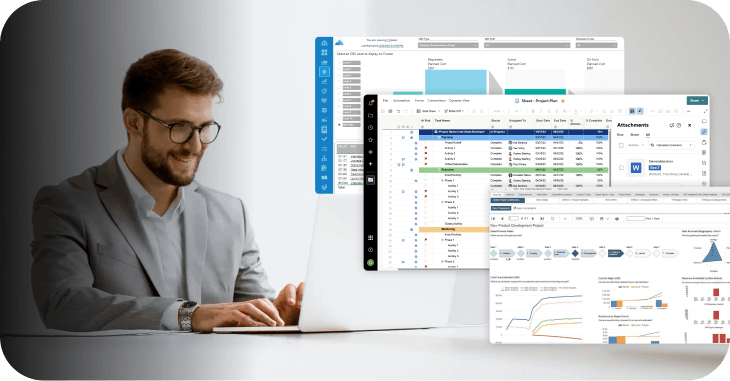
Project Portfolio Management (PPM) software use cases have evolved in 2026, from a reporting layer to an operating engine that aligns strategy, investments, capacity and operations. Nowadays, teams need advanced PPM tools that automate manual tasks, help make confident go/no-go decisions – and much more. In this blog, we’ll break down five PPM tools to watch in 2026 and describe what makes each one a strong fit for modern-day life sciences portfolios.What is Project Portfolio Management?Project Portfolio Management (PPM) is a structured roadmap for organizations to select, invest on and steer forward a strategic mix of projects to achieve their core business goals.Unlike project management (which focuses on one project), PPM takes all initiatives into consideration to answer big-picture questions, such as: Which projects should we start, pause, or stop for utmost value realization? Do we have the resource capacity to deliver without fail? What are our precautionary measures if priorities shift or timelines are missed?Learn more about how PPM tools promote better collaboration: click here What are the key PPM goals to look forward in 2026?SPM/PPM synchronizationThe priority is shifting towards connecting strategy to delivery in one decision loop. That means aligning Strategic Portfolio Management with PPM. The goal: stronger strategic alignment, accelerated trade-offs and higher visibility from strategic themes down to milestones and outcomes.AI enablement approachAdoption of AI is growing to reduce manual work and accelerate portfolio decision-making. The most valuable use cases are auto-classifying work, flagging risk early, predicting resource overload etc.The goal: adopting an AI-enabled ecosystem that improves planning, prioritization and portfolio performance.Growing need for defined processes Lastly, strong PPM outcomes will depend on clearly defined ways of working. This includes standardizing how demand is captured, priorities are set, resources are assigned and changes are approved. Alongside, data governance becomes non-negotiable with clear ownership, audit trails, and quality checks. The goal: converting the PPM tools ecosystem into a trusted source of truth for ultimate value realization. .card-component { display: flex; border-radius: 17.5px; border: 1px solid #CEE0EB; background: linear-gradient(126deg, #EBF7FF 28.88%, #FFF 86.32%); font-family: 'Open Sans', sans-serif; width: 80%; margin-bottom: 20px; } .card-image { width: 30%; } .card-image img { width: 100%; height: 100%; object-fit: cover; display: block; } .card-content { width: 70%; display: flex; flex-direction: column; justify-content: center; padding: 24px 30px; gap: 8px; } .card-tag { color: #008BFF; font-size: 12px; font-weight: 700; margin: 0; } .card-title { color: #232322; font-family: Montserrat; font-size: 18px; font-weight: 700; line-height: 21px; margin: 0; } .card-description { color: #272727; font-size: 10px; font-weight: 400; line-height: 20px; margin: 0; } .btn-card { display: flex; width: 124px; height: 36px; justify-content: center; align-items: center; border-radius: 83px; background: #008BFF; color: white; font-weight: 700; font-size: 12px; text-decoration: none; margin-top: 10px; } .btn-card:hover { background: #007ACC; } /* Responsive */ @media (max-width: 768px) { .card-component { flex-direction: column; } .card-image { width: 100%; } .card-content { width: 100%; padding: 20px; } } PROJECT PORTFOLIO MANAGEMENT A comprehensive buyer’s checklist for PPM software Use this practical checklist to evaluate modern PPM solutions and select the right fit for your organization’s needs. Learn more 5 best Project Portfolio Management tools to achieve your goalsIn 2026, the “best” tool is the one that fits your portfolio maturity, governance and operations model. Here’s a breakdown of the five best options recommended by our PPM experts:1. SmartsheetTo start our list of project portfolio management tools, we take Smartsheet, a flexible work management platform that many PMOs configure for PPM. It’s best known for its spreadsheet-style interface, real-time dashboards, and workflow automation. It also scales portfolio execution using add-ons like Control Centre for standardization and roll-up reporting.Why choose Smartsheet – in a nutshellEasy adoption for new users due to the familiar grid viewStrong dashboards with automation feature for status reportingGood standardization at scale with templates/control featuresDisadvantages of the platform: Not ideal for high-complexity PPM use cases, compared to othersCan become complex to govern at enterprise scale2. PlanviewPlanview is an advanced PPM solution built for connecting portfolios, programs, resources, and financials to business outcomes, built for PMOs managing large portfolios. We recommend Planview due to its strong emphasis on balancing capacity with demand, portfolio visibility, and real-time tracking. Why choose Planview – in a nutshellPortfolio visualization and resource allocation for cross-team delivery planningAI-enabled capabilities to support portfolio strategy and executionSupports forecasting and what-if scenarios to guide resourcing decisionsDisadvantages of the platform: Budget/cost management can feel limited, compared to some alternativesCapacity planning can be hard to master; UI usability can be improved3. OnePlanOnePlan is a Project Portfolio Management (PPM) software designed to connect strategy to execution, with built-in focus on portfolio planning, resource capacity, and financial visibility. It’s a strong fit for organizations standardizing on the Microsoft ecosystem (Project, Teams, Power BI, Azure DevOps), and it’s often evaluated as a path forward as Project Online retires on September 30, 2026.Why choose OnePlan – in a nutshellStrong Microsoft alignment and integrations (good for Project Online migrations) Clear portfolio, resource and financial planning in one platform Pre-built Power BI reporting helps teams attain higher value realizationDisadvantages of the platform: Pricing is not fully transparent; typically, volume-based and sales-led Licensing/permissions can be complex across roles4. PlaniswarePlanisware (Orchestra/Enterprise version) is an end-to-end PPM platform built for complex, regulated portfolios, mostly used among medium to large pharmaceutical and medical devices leaders. It supports the full flow from idea intake and prioritization to scenario planning, capacity planning, and financial control.Why choose Planisware – in a nutshellStrong portfolio management for prioritization against strategic goalsPlanisware Orchestra emphasizes real-time visibility and standardized best practicesDeep financial and resource capacity management for large-scale projectsDisadvantages of the platform: Higher cost is a common concern, especially for smaller teamsSteeper learning curve due to depth of configuration and controls5. JiraLast on our list of best PPM software is Jira. Primarily considered an issue-tracking and agile delivery tool, but many PMOs also le it as part of a broader PPM stack. For portfolio-level planning, organizations typically layer in Advanced Roadmaps (to plan work around multiple teams) and Jira Align (to connect strategy, roadmaps, and delivery at scale).Why choose Jira – in a nutshellStrong for execution tracking across teams and workflows Useful for cross-team planning with Advanced Roadmaps (Jira Premium/Enterprise) Can extend to portfolio/enterprise alignment with Jira AlignDisadvantages of the platform: Deeper portfolio needs may require add-ons and configurationScenario planning, portfolio financials, and capacity management are limited How to select the best PPM tool for your needs?PPM selection criteria should be driven by needs based on how you oversee governance, fund programs, manage capacity and make portfolio decisions. Here’s a checklist to consider while making the decision: Selection criteria for PPM softwareStrategic planning: supports both strategy and executionUser-friendly: intuitive UI with a short learning curveRight features: matched to your core business goals Scalable: handles growth in users, data, and portfolio complexityIntegrations: connects cleanly with your existing tools ecosystemCustomizable: adapts to your workflows without any frictionCost + ROI: evaluates total cost of ownership and expected value over timeVendor support: reliable help, services, and a clear release roadmap At i2e Consulting, we bring 15+ years of PPM expertise to tool selection and implementation. We don’t stop at recommending a platform; we build the structured processes that ensure portfolio success – offering you increased visibility, coordination, and oversight.Here’s how our experts do it:Align tool requirements to your portfolio goals and decision needsStandardize workflows and governance around all teamsSet strong data governance, so that the reporting is trustedBuild a practical roadmap for rollout and custom integrations (and more)Begin your PPM tool selection and implementation with a trusted partner – connect with our PPM consulting experts to find the right fit for your portfolio needs. Frequently Asked Questions .faq-wrapper { max-width: 850px; margin: 20px auto; font-family: 'Open Sans', sans-serif; } .faq-item { border-bottom: 1px solid #e0e0e0; padding: 10px 0; } .faq-item summary { font-family: 'Montserrat', sans-serif; font-size: 18px; font-weight: 600; cursor: pointer; list-style: none; position: relative; padding-right: 30px; } /* Remove default marker */ .faq-item summary::-webkit-details-marker { display: none; } /* Down arrow (closed state) */ .faq-item summary::after { content: "▼"; position: absolute; right: 0; top: 0; font-size: 16px; transition: transform 0.3s ease; } /* Up arrow (open state) */ .faq-item[open] summary::after { content: "▲"; } .faq-item p { margin-top: 12px; font-family: 'Open Sans', sans-serif; font-size: 17px; line-height: 1.7; color: #272727; } 1. Is a project management tool the same as a PPM tool? No, it’s not. Project management focuses on delivering one project well. PPM manages many projects together, prioritizing the right work, balancing funding and capacity, and supporting portfolio-level decisions. 2. What should life sciences teams prioritize when selecting a PPM tool for 2026? Look for strategic planning and execution alignment, strong capacity and scenario planning, audit-ready governance, and integrations with your existing systems. Remember, user adoption and data governance matter as much as features. 3. How long does it take to see value from adopting a new PPM solution? You can get early visibility within weeks if workflows and data standards are defined upfront. Full value is realized after processes are standardized, reporting stabilized and teams adopt new ways of working seamlessly.

Complete guide: Upstream and downstream PPM integrations in life sciences
IntroductionManual consolidation is not a PPM capability gap; it is an integration architecture gap.The PPM tool is live, adoption is reasonable, dashboards look good, but still, there is dependency on spreadsheet, and manual reconciliations. A modern life sciences PPM platform sits at the center of a complex ecosystem of clinical, financial, operational, and analytics systems. If those connections are weak, delayed, or manually reconciled, portfolio decisions lose credibility. The root cause is rarely the PPM tool itself. In most cases, the value gap is created by weak or fragmented integrations with upstream and downstream systems. When PPM operates as a standalone system, it becomes a reporting layer over partial, delayed, and manually curated data. When PPM is tightly integrated across the enterprise, it becomes a decision platform that orchestrates work, capital, and risk in near real time.For PPM decision makers in life sciences, the path to sustainable ROI is clear: design PPM as the hub of an integrated operating ecosystem, not as an isolated application.Why does this matter now?The urgency is clear. Life sciences organizations are prioritizing stronger enterprise data foundations, governance, and interoperability to make analytics usable and to operationalize AI in daily workflows. AI cannot function reliably if portfolio, clinical, and financial data are misaligned.At the same time, clinical systems buyers increasingly expect integrated clinical operations platforms, such as CTMS connected with eTMF and adjacent systems, to reduce daily friction for study teams. This reinforces the need for integration-first PPM designs that reflect real operational data flows.Industry narratives for 2026 consistently emphasize digital transformation and data integration as core priorities in life sciences. Standalone PPM tools no longer meet executive expectations. Connected PPM ecosystems accelerate decision cycles, strengthen compliance posture, and reduce reconciliation effort across clinical, finance, and R&D.What systems should integrate with PPM in life sciences?In life sciences, a PPM tool governs prioritization, stage-gate processes, portfolio balancing, resource and capacity planning, financial forecasting, and scenario modeling across R&D, clinical development, regulatory, and manufacturing initiatives.It must answer questions such as:Which studies and programs align to strategy?Do we have the right therapeutic mix and risk profile?Where are resource bottlenecks across functions and regions?How do actual costs compare to forecasts and capitalization plans?Without integration, these answers rely on manual spreadsheets and offline adjustments. Credible portfolio governance requires real-time or near real-time inputs from clinical systems, HR master data, and ERP actuals. PPM becomes the decision hub only when it reflects operational truth.What is upstream integration in life sciences PPM?Upstream integrations provide the inputs that shape portfolio decisions and project setup. Typical upstream systems include:Strategic planning and corporate portfolio toolsR&D pipeline and asset management systemsClinical trial design and protocol management systemsDemand intake and idea management platformsResource capacity planning and HR systemsFinancial planning and budgeting toolsThese systems define what work should be done, why it matters, and what constraints exist.What downstream systems should connect to PPM?Downstream integrations connect PPM to systems where work is executed and where operational evidence is generated. These typically include:CTMS (Clinical Trial Management Systems)EDC (Electronic Data Capture)eTMF (electronic Trial Master File)IRT/RTSMCRO vendor systemsERP and financial actuals systemsTime tracking and effort reporting toolsThese systems provide real-world progress, cost, quality, and compliance data.Without both sides connected, PPM becomes disconnected from reality; either strategic plans are not grounded in execution, or execution data is not translated into portfolio-level insight. .card-component { display: flex; border-radius: 17.5px; border: 1px solid #CEE0EB; background: linear-gradient(126deg, #EBF7FF 28.88%, #FFF 86.32%); font-family: 'Open Sans', sans-serif; width: 80%; margin-bottom: 20px; } .card-image { width: 30%; } .card-image img { width: 100%; height: 100%; object-fit: cover; display: block; } .card-content { width: 70%; display: flex; flex-direction: column; justify-content: center; padding: 24px 30px; gap: 8px; } .card-tag { color: #008BFF; font-size: 12px; font-weight: 700; margin: 0; } .card-title { color: #232322; font-family: Montserrat; font-size: 18px; font-weight: 700; line-height: 21px; margin: 0; } .card-description { color: #272727; font-size: 12px; font-weight: 400; line-height: 20px; margin: 0; } .btn-card { display: flex; width: 124px; height: 36px; justify-content: center; align-items: center; border-radius: 83px; background: #008BFF; color: white; font-weight: 700; font-size: 12px; text-decoration: none; margin-top: 10px; } .btn-card:hover { background: #007ACC; } /* Responsive */ @media (max-width: 768px) { .card-component { flex-direction: column; } .card-image { width: 100%; } .card-content { width: 100%; padding: 20px; } } PROJECT PORTFOLIO MANAGEMENT Unify planning and execution across your portfolio Connect upstream strategy with downstream delivery to improve alignment, streamline workflows, and gain real-time portfolio insights. Learn more How upstream and downstream integrations improve PPM ROI in pharmaUpstreamUpstream integrations ensure that PPM is aligned with strategic intent and real-world constraints from day one.1. Strategy-to-portfolio traceabilityIntegrating strategic planning and asset pipeline systems with PPM enables clear traceability from corporate objectives to funded projects and programs. This allows leadership to:Validate that investments align with therapeutic area prioritiesIdentify over- or under-investment across portfoliosRapidly re-balance funding based on changing strategyThis traceability is a core driver of ROI because it reduces capital misallocation and improves strategic focus. 2. Demand intake and portfolio shapingWhen idea intake and early-stage demand systems are integrated with PPM, organizations can apply consistent evaluation criteria and gating processes. This enables:Earlier visibility into emerging workStandardized business casesData-driven portfolio shaping before commitments are madeThe result is fewer low-value projects entering execution and better utilization of limited R&D and clinical resources. 3. Capacity-constrained planningIntegration with HR and resource management systems allows PPM to model real capacity, not theoretical headcount. Decision makers can:See portfolio feasibility under realistic constraintsIdentify skill bottlenecks earlyMake informed trade-offs between timelines and resourcingThis directly improves delivery predictability and reduces downstream rework.DownstreamDownstream integrations close the loop between plans and reality, a critical requirement in regulated, data-intensive life sciences environments.1. Real-time progress and milestone confidenceIntegrating CTMS, eTMF, and related systems provides automated updates on site activation, patient enrollment, monitoring, and document completeness. PPM leaders gain:Near real-time milestone statusEarly warning signals on trial delaysObjective evidence to support executive reportingThis reduces surprise-driven decisions and increases confidence in portfolio-level forecasts. 2. Financial actuals and forecast accuracyIntegration with ERP and financial systems enables PPM to reconcile forecasts with actuals. This supports:More accurate cost-to-complete projectionsEarly detection of budget overrunsImproved capital planning across portfoliosOver time, this improves forecast quality and reduces systematic bias in portfolio financials. 3. Vendor and CRO performance visibilityDownstream integrations with CRO and vendor systems allow organizations to monitor performance across trials and programs. PPM leaders can:Compare vendors across timelines, quality, and costIdentify systemic performance issuesIncorporate vendor risk into portfolio decisionsThis transforms PPM from a planning tool into a performance management platform.The compounding effect: Integrated PPM as a decision platformThe true ROI impact emerges when upstream and downstream integrations operate together. In this model, PPM becomes the system where:Strategy informs executionExecution informs strategyFinancials reflect realityRisks are quantified and managedThis creates a compounding effect:Better data leads to better decisionsBetter decisions improve delivery outcomesImproved outcomes increase confidence and adoptionHigher adoption further improves data qualityThis virtuous cycle is how organizations move from basic portfolio reporting to enterprise portfolio optimization.Integration is an operating model choice, not just an IT choiceMany integration initiatives fail because they are treated as technical projects rather than operating model transformations. To maximize ROI, life sciences organizations must address:Data ownership and governanceProcess alignment across functionsStandard definitions for milestones, costs, and statusClear accountability for data qualityWithout this foundation, even the best technical integrations will underperform.Key considerations when setting up PPM integrationsPrioritize high-impact business processes Start with integrations that directly influence capital allocation, resource planning, regulatory milestones, or revenue forecasting. Early value builds executive confidence and accelerates adoption.Architect for scale and portfolio growth Life sciences portfolios expand across therapeutic areas, geographies, and modalities. Integration design must accommodate increased data volumes, new systems, and evolving operating models without rework.Minimize data redundancy to preserve a single source of truth Avoid replicating the same dataset across multiple systems. Clear system-of-record definitions reduce reconciliation effort, improve reporting accuracy, and strengthen governance.Select the right interface model based on enterprise architecture Choose between APIs, middleware, or data lake approaches depending on existing infrastructure maturity, security requirements, and latency expectations. The integration strategy should align with enterprise IT standards, not operate in isolation.Enforce robust data mapping and standardization Standard taxonomies for projects, resources, financials, and milestones are critical. Without harmonized data structures, integration only accelerates inconsistency.Automate data flows to eliminate manual consolidation Manual data aggregation across clinical, finance, and portfolio systems introduces latency and error. Automated pipelines enable near real-time visibility, faster decision cycles, and measurable ROI from the PPM platform.i2e Consulting: Designing PPM for maximum ROIAt i2e, we see consistently that PPM ROI is driven less by tool configuration and more by how the PPM platform is architected within the broader enterprise ecosystem.Our point of view is grounded in three principles:1. PPM as the portfolio nerve centerPPM should act as the central orchestration layer connecting strategy, execution, finance, and risk, not as a passive reporting tool. This requires intentional design of upstream and downstream integrations as part of the PPM operating model.2. Fit-for-purpose integration architectureNot every system needs deep, real-time integration. The right approach balances:Business criticalityData volatilityDecision cadenceRegulatory and audit requirementsi2e helps life sciences organizations design pragmatic, scalable integration architectures that focus on investment where it drives the highest decision value.3. From data movement to decision enablementThe goal is not just to move data between systems. The goal is to enable better portfolio decisions. i2e focuses on:Standardizing portfolio KPIsEmbedding financial and operational logicEnabling scenario-based decision supportThis ensures that integrated PPM becomes a true decision platform for R&D and clinical portfolios.For life sciences leaders, the message is clear: PPM ROI is unlocked when integrations are treated as strategic enablers of portfolio intelligence. With the right operating model and integration strategy, PPM becomes a catalyst for faster, more confident, and more capital-efficient portfolio decisions.About i2ei2e partners with life sciences organizations to design, implement, and optimize PPM and portfolio operating models that connect strategy to execution through data-driven, integrated platforms. Our approach helps clients move beyond tool adoption to sustained portfolio value creation.

Why LLM Fine-Tuning is the next competitive advantage for life sciences
Global life sciences companies operate under sustained competitive pressure to accelerate scientific innovation while simultaneously ensuring operational efficiency and cost discipline across all functions. In this environment, Large Language Models (LLMs) are emerging as a transformative acceleration engine, enabling organizations to bypass traditionally sequential and manually intensive steps and achieve task specific outcomes far faster than before. From conducting competitive due diligence to drafting regulatory documents, and from generating novel chemical compounds to supporting clinical evidence, the role of artificial intelligence is becoming increasingly aspirational and is now considered essential for pharmaceutical growth and improved patient outcomes.These models, while highly capable of understanding general pharmaceutical concepts, do not inherently possess the organization specific knowledge, internal reasoning patterns, or established methods for interpreting and presenting scientific information that teams rely on in real workflows. As a result, the limitations of off-the-shelf LLMs create a structural ceiling that prevents wider adoption in areas where organizations depend on highly skilled, specialized, and rate limiting scientific processes. Another major challenge is the need to protect sensitive intellectual assets that pharmaceutical companies would otherwise have to expose to external LLMs providers.LLM fine tuning directly addresses these gaps by adapting the model to an organization’s internal knowledge, scientific conventions, and established decision frameworks. By training the model on proprietary datasets such as experimental records, regulatory submissions, archived study protocols, internal reports, and domain specific terminology, fine tuning enables the LLMs to reason and generate outputs that align with the organization’s real workflows. Fine tuning also improves the model’s ability to interpret scientific evidence, maintain consistent terminology, and follow the organization’s established communication and documentation patterns.Furthermore, when a fine-tuned model is hosted internally through a sovereign deployment approach, data security concerns are mitigated because sensitive information remains within the organization’s-controlled environment. This ensures full protection of intellectual assets while still enabling advanced model performance.This alignment allows the model to replicate expert level writing styles, meet internal quality standards, and understand the detailed structure of scientific evidence, hypotheses, and decisions within the company. As a result, fine-tuned LLMs overcome the ceiling imposed by generic models, enabling artificial intelligence to be deployed securely in highly skilled and rate limiting processes that previously depended exclusively on specialized scientific expertise.In this blog, we explore the essential aspects of model fine tuning and discuss the primary considerations that guide the decision to implement this methodology.The Limits of Generic LLMs in a Regulated and IP‑Sensitive IndustryEvery pharmaceutical organization operates within a highly specialized and tightly governed environment. Internal processes, regulatory documentation styles, scientific interpretation frameworks, and communication protocols are often unique to each company. At the same time, the industry works with highly sensitive intellectual property, proprietary data assets, and confidential patient information that must be managed within strict compliance frameworks.Generic, publicly available language models are powerful, scalable, and highly capable. They already demonstrate exceptional performance in improving operational efficiency and reducing the cost of decision-making across multiple industries. Yet, when applied directly to domain-specific pharmaceutical use cases, they present both constraints and risks. These models may not fully understand scientific terminology in context, internal organizational language, regulatory nuance, or the decision frameworks embedded in pharmaceutical R&D. More critically, they may not always be suitable for use with proprietary or sensitive datasets without robust controls.To address these challenges, organizations often begin with techniques such as Retrieval Augmented Generation (RAG), in-context learning, and structured prompt engineering. While these methods can improve model relevance and mitigate some risks, they do not fully align the model with the organization’s internal language, domain knowledge, and governance expectations.This is where model fine tuning becomes a strategic differentiator.Fine Tuning as the Path to Enterprise Aligned IntelligenceFine tuning is the process of training an open weights language model on curated, domain specific datasets so that it can internalize specialized knowledge, organization specific terminology, and preferred communication structures. In simple terms, it aligns the behavior of the model with the way an enterprise thinks, writes, reasons, and operates. This is the foundation of enterprise LLM fine tuning and a key differentiator in modern LLM implementation strategies.The result is a custom LLM that does not simply answer questions but demonstrates contextual understanding that is relevant to therapeutic areas, research processes, clinical frameworks, and regulatory environments. Essential Building Blocks for Custom LLM DevelopmentTo harness meaningful enterprise value while maintaining compliance, data security, and intellectual property protection, pharmaceutical organizations must adopt a structured and disciplined approach to enterprise LLM fine-tuning. A mature LLM implementation framework should be built on the following foundational elements:1. Selection of the right base modelSelecting the appropriate foundation model is a strategic decision that directly influences scalability, regulatory posture, and long-term model sovereignty. For pharmaceutical R&D and clinical environments, the base model must demonstrate strong baseline reasoning in scientific and medical language, high context handling capability for long technical documents, and architectural flexibility to support parameter-efficient fine-tuning. Beyond raw performance, enterprises must evaluate licensing structures, model transparency, and deployability within secure, on-prem or private cloud environments to ensure full control over intellectual property and patient-sensitive data.Equally critical is assessing the model’s prior training exposure to biomedical and regulatory language patterns. Models with stronger scientific priors typically require less domain adaptation effort, reducing fine-tuning cost and risk. 2. Robust data pipeline reviewIn pharmaceutical organizations, the value of fine-tuning is fundamentally determined by the quality, lineage, and governance of internal data assets. A rigorous data pipeline review must address ingestion across structured (clinical databases, assay data), and unstructured sources (protocols, medical narratives, regulatory correspondence). Data must undergo systematic curation, normalization, de-identification where applicable, and metadata enrichment to ensure both compliance and semantic coherence for model learning.Beyond data engineering, enterprises must implement traceability mechanisms that link training data back to source systems and governance policies. This is essential for audit readiness, bias investigation, and future model revalidation. Attention should be given to versioning of datasets, controlled vocabulary alignment (e.g., MedDRA, CDISC), and separation of training, validation, and post-deployment feedback loops. A robust pipeline ensures that fine-tuning becomes a repeatable enterprise capability rather than a one-off experiment.3. Fine-tuning methodologyNot all pharma use cases warrant the same depth of model modification. The fine-tuning strategy must be explicitly aligned with the maturity of the use case and its potential impact on scientific, clinical, or regulatory outcomes. Early-stage knowledge assistance or literature synthesis may benefit from lightweight approaches such as parameter-efficient fine-tuning or instruction tuning. In contrast, higher-risk applications e.g., protocol optimization support or signal detection augmentation, may require deeper domain adaptation combined with human-in-the-loop controls.4. Comprehensive model performance assessmentModel evaluation must extend across multiple performance dimensions, including factual reliability in scientific contexts, robustness to ambiguous or incomplete inputs, and stability across therapeutic domains. Benchmarking should include domain-specific test sets derived from internal documents, regulatory texts, and real-world operational queries.Bias and safety evaluation is equally critical. Models must be assessed for skewed outputs related to patient demographics, therapeutic areas, or study geographies, particularly in clinical and safety applications.5. Model deployment and governance frameworkDeploying fine-tuned models in pharma requires an enterprise-grade governance framework that integrates security, compliance, and operational oversight. Models must be hosted within secure environments that align with corporate data protection standards, ensuring that proprietary compounds data, clinical records, and regulatory documents remain within organizational boundaries. Role-based access controls, logging, and full interaction traceability are essential to meet audit requirements.Governance must also encompass lifecycle management, this includes model version control, change management procedures, revalidation triggers, and retirement policies. Documentation standards should support inspection readiness and demonstrate that the model behaves consistently within defined performance boundaries. i2e’s Point of viewWe recommend that fine tuning be viewed not as a technical experiment but as a strategic lever to embed institutional knowledge into AI systems and create sustainable competitive advantage. It enables organizations to build AI capabilities that are context aware, aligned with governance expectations, and operationally scalable within a regulated environment.While fine tuning is a powerful enabler, its success depends on clearly defined problem statements, validated business needs, a disciplined data strategy, and strong cross functional collaboration across IT, R and D, Quality, Legal, and Compliance teams.We believe that early adopters will gain a meaningful advantage by learning quickly from both successful implementations and early limitations, allowing them to evolve toward more advanced capabilities and accelerate enterprise readiness. As organizations refine their LLM implementation practices and deepen their fine-tuning expertise, they build the internal capacity required to scale custom models safely and effectively across functions.Looking ahead, the workforce will increasingly depend on such models as core tools for scientific, operational, and regulatory work. Organizations that invest early in fine-tuned models will not only strengthen business continuity but also create a modern digital environment that attracts and retains high quality talent who expect AI enabled workflows as part of their daily roles.
 Ask your question